
Every device that communicates on a local network must follow rules for when and how it may send data. Media Access Control, commonly called MAC, is the part of networking that manages this access to a shared transmission medium. It operates close to the hardware, shaping how frames are addressed, transmitted, checked, and controlled before higher-level protocols become involved.
TLDR: Media Access Control functions manage how devices access a network medium and exchange data at the data link layer. MAC is responsible for addressing, framing, error detection, access coordination, and flow-related control. It is essential in Ethernet, Wi-Fi, and many other network technologies because it helps devices communicate reliably and efficiently on shared or switched networks.
Where MAC Fits in Networking
MAC belongs to the data link layer of the OSI model, specifically the lower sublayer of Layer 2. The data link layer is often divided into two parts: the Logical Link Control sublayer and the Media Access Control sublayer. Logical Link Control deals with identifying network layer protocols and managing logical communication, while MAC handles the practical details of using the physical network medium.
In simple terms, MAC answers questions such as: Which device is sending this frame? Which device should receive it? Is the medium free to use? Was the frame damaged in transmission? These questions are fundamental whether the medium is a copper cable, fiber optic link, or wireless radio channel.
MAC Addressing
One of the most recognized MAC functions is hardware addressing. A MAC address is a unique identifier assigned to a network interface, such as an Ethernet adapter or Wi-Fi card. It is typically written as six pairs of hexadecimal characters, for example, 00:1A:2B:3C:4D:5E.
MAC addresses are used for communication within a local network segment. When a computer sends data to another device on the same LAN, it places the destination device’s MAC address in the frame header. Switches read this address and forward the frame to the appropriate port. This makes local delivery efficient and reduces unnecessary traffic.
It is important to distinguish MAC addresses from IP addresses. An IP address identifies a device logically across networks, while a MAC address identifies a network interface at the local link level. Routers use IP addresses to move packets between networks, but within each local link, MAC addressing is used to deliver frames to the correct device.
Framing and Frame Structure
Another central MAC function is framing. Data from upper layers must be packaged into a format suitable for transmission across the physical medium. The MAC sublayer creates frames by adding headers and trailers around the payload.
A typical MAC frame includes several important fields:
- Destination MAC address: identifies the intended receiver.
- Source MAC address: identifies the sender.
- Type or length field: indicates the payload type or frame size.
- Payload: carries data from higher layers, such as an IP packet.
- Frame check sequence: supports error detection.
Framing gives structure to communication. Without it, devices would not know where one transmission ends and another begins, or how to interpret the data being received.
Controlling Access to the Medium
The phrase media access control comes from one of the sublayer’s most important responsibilities: deciding when devices may transmit. This is especially important when multiple devices share the same communication medium.
In traditional Ethernet networks using hubs, devices shared the same collision domain. Ethernet used a method called Carrier Sense Multiple Access with Collision Detection, or CSMA/CD. Devices listened to the cable before transmitting. If two devices transmitted at the same time, a collision occurred, and both devices waited for a random interval before trying again.
Modern switched Ethernet has largely eliminated collisions in typical full-duplex environments. Each device has a dedicated connection to a switch port, allowing sending and receiving at the same time. Even so, MAC functions remain vital because frames still require addressing, forwarding, and error checking.
Wireless networks use a different approach because radio communication is shared and collisions are harder to detect. Wi-Fi commonly uses Carrier Sense Multiple Access with Collision Avoidance, or CSMA/CA. Instead of detecting collisions after they happen, Wi-Fi attempts to reduce the chance of collisions through waiting periods, acknowledgments, and coordination mechanisms.

Error Detection
MAC also supports error detection. During transmission, electrical interference, weak signals, faulty cables, or radio noise can corrupt data. To help detect this, many MAC frame formats include a Frame Check Sequence, often based on a cyclic redundancy check.
When a frame arrives, the receiving device calculates its own check value and compares it with the value included in the frame. If the values do not match, the frame is considered corrupted and is discarded. MAC error detection does not usually correct the error itself; instead, higher-level protocols such as TCP may request retransmission if necessary.
This function is critical for network reliability. It prevents damaged frames from being accepted as valid data and helps maintain the integrity of communication across the network.
Flow Control and Congestion Awareness
Although MAC is not a full congestion management system, it can participate in flow control. Flow control helps prevent a fast sender from overwhelming a slower receiver or a congested switch port. In Ethernet, mechanisms such as pause frames can temporarily signal a sender to stop transmitting.
This is particularly useful in environments where lossless or near-lossless delivery is important, such as storage networks or high-performance data centers. However, flow control must be configured carefully. Used incorrectly, it can contribute to delays or performance issues by spreading congestion across more of the network.
MAC Functions in Ethernet Switching
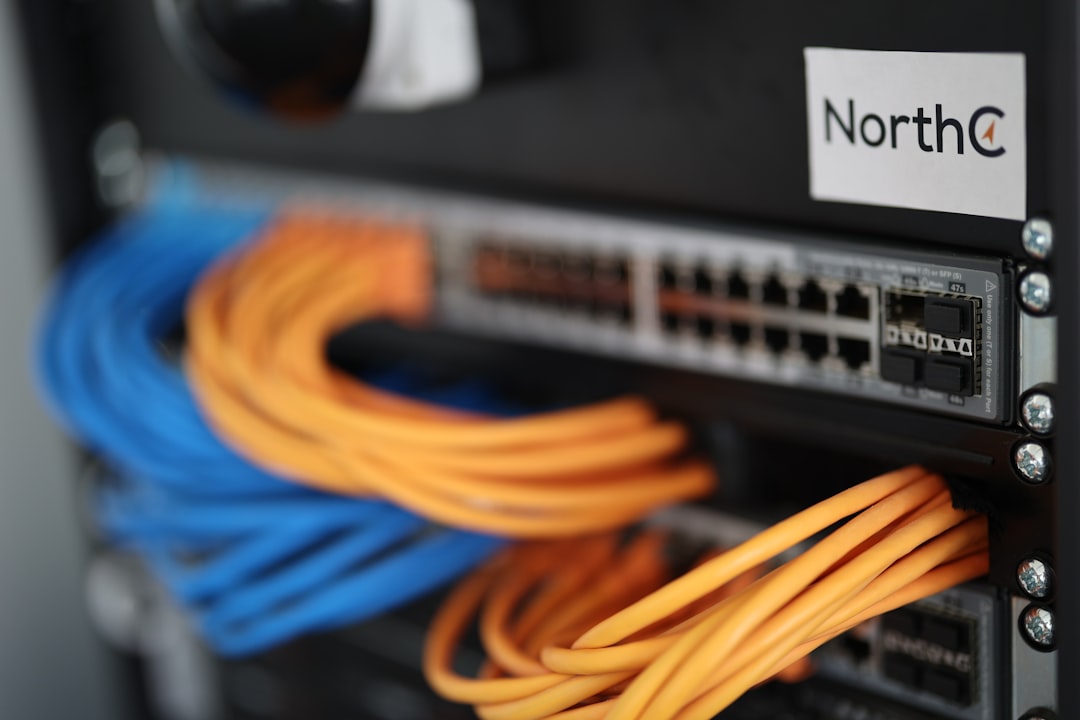
Network switches rely heavily on MAC functions. A switch builds a MAC address table by observing the source MAC addresses of incoming frames. It records which addresses are reachable through which physical ports.
When a frame arrives, the switch checks the destination MAC address and consults its table. If the destination is known, the switch forwards the frame only to the correct port. If the destination is unknown, the switch may flood the frame out multiple ports, except the one it arrived on. This learning and forwarding process is one reason switched Ethernet is efficient and scalable.
Switches also use MAC-related behavior to support features such as:
- VLAN separation: dividing a physical network into multiple logical networks.
- Port security: limiting which MAC addresses may use a switch port.
- Loop prevention: working with protocols that prevent endless frame circulation.
- Traffic filtering: controlling frame forwarding based on address information.
Broadcast, Multicast, and Unicast Communication
MAC addressing supports several communication patterns. Unicast communication sends a frame from one device to one specific destination. This is the most common form of network communication.
Broadcast communication sends a frame to all devices in the local broadcast domain. The broadcast MAC address is commonly written as FF:FF:FF:FF:FF:FF. Broadcasts are useful for discovery protocols, but excessive broadcast traffic can reduce network performance.
Multicast communication sends frames to a selected group of devices. It is often used for streaming, discovery, and specialized network services. MAC-level multicast allows efficient delivery when multiple receivers need the same information.
Security Considerations
MAC functions are useful for network control, but they should not be treated as strong security by themselves. MAC addresses can often be changed or spoofed in software. An attacker may imitate an approved MAC address to bypass weak access controls.
For that reason, MAC-based security should be combined with stronger protections such as 802.1X authentication, strong Wi-Fi encryption, network segmentation, monitoring, and proper switch configuration. MAC filtering can help reduce casual misuse, but it is not a substitute for authentication and encryption.
Why MAC Functions Matter
MAC functions are often invisible to users, but they are indispensable to everyday networking. They allow devices to identify each other locally, organize data into frames, coordinate access to shared media, detect transmission errors, and support efficient switching.
Whether someone is sending an email, joining a video meeting, connecting to a wireless access point, or accessing a server in a data center, MAC operations are working in the background. A clear understanding of these functions helps network administrators troubleshoot connectivity problems, improve performance, and design more reliable networks.
In serious network design, MAC should be viewed as a foundational control mechanism. It does not replace routing, security policy, or application-layer safeguards, but it provides the disciplined local delivery system on which those higher-level services depend.