
In an era where data is abundant but often fragmented, organizations increasingly struggle not with collecting information but with understanding the relationships hidden inside it. Traditional relational databases excel at storing structured records, yet they often fall short when modeling deeply interconnected data. This is where knowledge graph management platforms like Neo4j play a central role. By focusing on relationships as first-class entities, these platforms enable sophisticated querying, real-time insights, and scalable intelligence across industries.
TLDR: Knowledge graph management platforms such as Neo4j allow organizations to model and query complex relationships between data points in a highly intuitive way. Unlike traditional relational databases, graph databases are optimized for interconnected data and dynamic queries. They improve performance, transparency, and flexibility when dealing with complex networks like customer journeys, fraud detection systems, and supply chains. For enterprises managing rich relational data, graph platforms provide a powerful and future-proof solution.
Understanding Knowledge Graphs
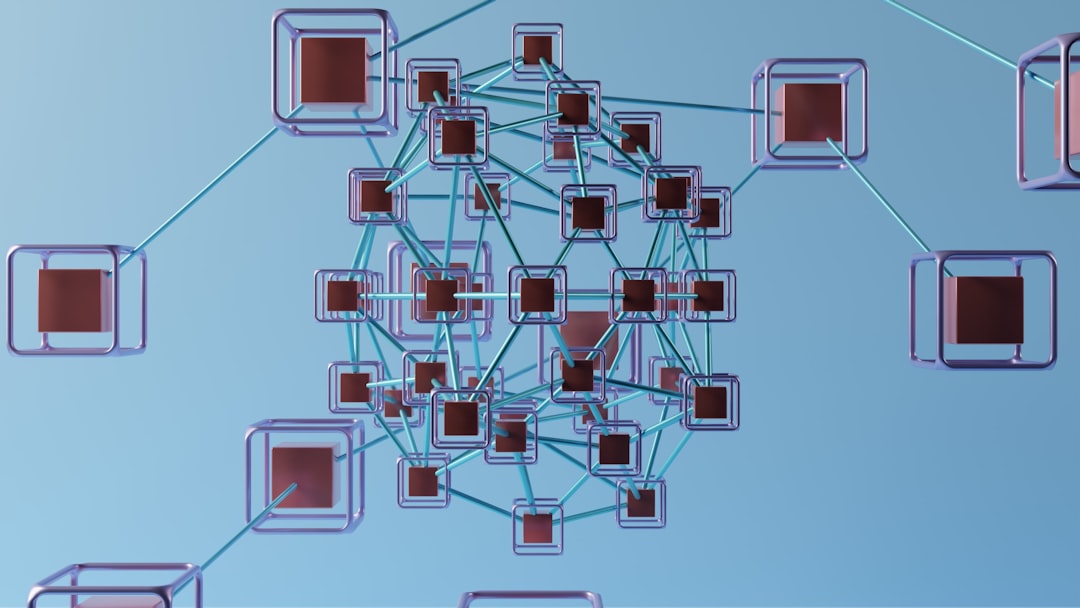
A knowledge graph represents data as a network of nodes (entities) and edges (relationships). Each node can represent something tangible or abstract — a person, organization, product, event, or concept. Edges define how those entities connect.
Unlike relational databases that organize data into tables and rows, graph databases are designed to store and traverse relationships directly. This architecture enables fast and intuitive queries across complex webs of information.

Key components of a knowledge graph include:
- Nodes: Entities such as customers, accounts, products, or locations.
- Relationships: Defined connections between nodes, often labeled to indicate their nature.
- Properties: Attributes stored on nodes or relationships, such as timestamps, categories, or weights.
- Schema (optional): Some graph platforms allow schema enforcement for consistency and governance.
Knowledge graphs are particularly valuable when the value of data lies not only in individual records but in how entities relate to one another.
Why Traditional Databases Struggle with Relationships
Relational databases require complex join operations to connect related tables. As relational complexity increases, performance can degrade significantly. Multi-level joins become computationally expensive, especially when exploring indirect relationships.
For example:
- Identifying fraud rings across multiple transactions.
- Tracing supply chain dependencies across global partners.
- Mapping influence chains in social networks.
- Discovering hidden links between cybersecurity threats.
These queries often require recursive joins and heavy indexing strategies in relational systems. Graph databases, by contrast, are optimized for relationship traversal, making connected data queries significantly more efficient.
The Role of Platforms Like Neo4j
Neo4j is one of the most established and widely adopted graph database platforms. It provides a native graph storage engine and query language (Cypher) designed specifically for relationship-driven queries.
Its strengths include:
- Native graph architecture: Relationships are stored directly, eliminating expensive join operations.
- Cypher query language: Human-readable syntax optimized for graph pattern matching.
- High scalability: Supports clustering and distributed deployments for enterprise needs.
- Visualization tools: Enables graphical exploration of the data network.
- Advanced analytics: Includes graph algorithms for centrality, similarity, and community detection.
Neo4j and similar platforms allow domain experts and data teams to express queries in terms of patterns, such as:
Find all customers who are indirectly connected to fraudulent accounts within three degrees of separation.
This kind of query is far more intuitive in graph syntax than in SQL.
Use Cases Across Industries
Knowledge graph management platforms provide value across various sectors where relationship intelligence is critical.
1. Financial Services
Financial institutions use graph platforms for:
- Fraud detection
- Anti money laundering investigations
- Know your customer compliance
- Risk network analysis

By mapping account owners, transactions, devices, and IP addresses as nodes and relationships, suspicious patterns become visible in ways traditional systems struggle to surface.
2. Healthcare and Life Sciences
Healthcare organizations model:
- Patient histories linked to treatments and outcomes
- Drug interaction networks
- Research collaboration graphs
- Genomic relationship data
Knowledge graphs allow researchers to explore correlations between conditions, treatments, and outcomes more efficiently.
3. Supply Chain Management
Modern supply chains are deeply interconnected. Graph databases help organizations:
- Identify single points of failure
- Simulate disruption scenarios
- Trace product origins
- Monitor vendor dependencies
Because relationships are dynamic, graph platforms support rapid updates and scenario modeling.
4. Cybersecurity
Security teams use graph queries to:
- Map attack paths
- Detect lateral movement
- Identify compromised credentials
- Connect suspicious activities across systems
Graph algorithms help uncover hidden indicators of compromise before damage escalates.
Comparison of Leading Knowledge Graph Platforms
While Neo4j is a market leader, several platforms operate in the graph database and knowledge graph space. The table below provides a comparison of key solutions:
| Platform | Architecture | Query Language | Strengths | Typical Use Cases |
|---|---|---|---|---|
| Neo4j | Native graph database | Cypher | Mature ecosystem, strong performance, enterprise clustering | Fraud detection, knowledge management, analytics |
| Amazon Neptune | Managed graph service | Gremlin, SPARQL | Cloud native integration, scalable infrastructure | Recommendation engines, identity graphs |
| TigerGraph | Native parallel graph | GSQL | High performance for large scale analytics | Real time fraud analytics, telecom networks |
| Stardog | Knowledge graph platform | SPARQL | Strong semantic reasoning and ontology support | Data integration, semantic applications |
Each platform offers different strengths depending on workload, semantic requirements, and deployment preferences.
Querying Relationships: The Strategic Advantage
The ability to query patterns rather than tables is transformative. In graph databases, queries often resemble the conceptual structure of the question itself.
For example:
- Find suppliers indirectly connected to a delayed shipment.
- Identify influencers within two hops of a product launch campaign.
- Detect circular ownership structures in corporate filings.
Because relationships are stored natively, traversal is significantly faster than multi-join SQL queries. This advantage becomes exponentially relevant as networks grow more interconnected.
Governance and Enterprise Considerations
As knowledge graphs scale, governance becomes critical. Platforms like Neo4j address enterprise requirements through:
- Access controls and role-based permissions
- Data lineage tracking
- Clustering and replication
- Integration with analytics and machine learning pipelines
Organizations must also consider:
- Data modeling standards
- Schema evolution strategies
- Performance monitoring
- Long-term maintainability
When properly governed, a knowledge graph becomes not just a database but a strategic intellectual asset.
Graph Algorithms and Advanced Analytics
Knowledge graph platforms often include built-in graph algorithms such as:
- PageRank and centrality analysis for identifying influential nodes.
- Community detection for discovering clusters and subgroups.
- Shortest path algorithms for route optimization and impact analysis.
- Similarity algorithms for recommendation systems.
These algorithms enable predictive insights that extend beyond static data storage. When integrated with machine learning models, knowledge graphs can dramatically improve model explainability by making relationships visible.
Implementation Best Practices
Deploying a knowledge graph platform requires disciplined planning. Recommended practices include:
- Start with a focused use case: Fraud detection or customer intelligence are common initial targets.
- Design around relationships: Avoid replicating relational data models in graph form without optimization.
- Iterate incrementally: Expand the graph as value is demonstrated.
- Invest in domain expertise: Graph modeling requires thoughtful schema design.
- Integrate visualization tools: Visualization accelerates stakeholder understanding.
Poorly designed graphs can become as unwieldy as poorly structured relational databases. Strategic modeling is essential.
The Long-Term Outlook
As enterprises increasingly pursue artificial intelligence, automation, and predictive analytics, structured relationship modeling becomes more valuable. Knowledge graphs offer a foundation for:
- Explainable AI
- Enterprise search
- Data integration across silos
- Regulatory transparency
- Intelligent automation
Graph-based architectures align well with the complexity of modern digital ecosystems. In a world defined by networks — social, financial, logistical, biological — relationship modeling is no longer optional.
Conclusion
Knowledge graph management platforms like Neo4j provide organizations with a serious and scalable method for modeling and querying interconnected data. Their native focus on relationships over tables enables performance, flexibility, and clarity that traditional systems often struggle to deliver.
For businesses handling complex webs of customers, suppliers, assets, risks, or concepts, graph platforms represent more than a database choice — they reflect a strategic decision to understand the world as it actually operates: not as isolated rows of data, but as dynamic networks of meaning.