
National flags are among the most recognizable symbols in the world, yet many of them share surprisingly similar design choices. Across continents, countries often use the same colors, layouts, and symbols to communicate independence, unity, faith, sacrifice, or geography. At the same time, a few national flags stand apart because they use rare shapes, uncommon colors, unusual emblems, or highly distinctive compositions.
TLDR: The most common national flags tend to use red, white, and blue, along with stripes, stars, crosses, and crescents. These elements appear frequently because they are simple, visible, symbolic, and historically influential. The least common flags are usually those with unusual shapes, rare colors such as purple, complex coats of arms, maps, weapons, animals, or unique proportions. Flags such as those of Nepal, Dominica, Mozambique, Bhutan, Belize, and Cyprus are often considered especially distinctive.
Why Many National Flags Look Similar
National flags are designed to be seen from a distance, reproduced easily, and understood quickly. For that reason, many countries rely on simple shapes and strong color contrast. A flag with three horizontal stripes or a bold cross can be recognized more easily than a complicated illustration, especially when it is waving in the wind.
Historical influence also explains why many flags share common features. Former colonies sometimes adopted colors or layouts inspired by earlier revolutionary movements, regional alliances, or neighboring nations. For example, the colors red, white, and blue became closely associated with liberty, republicanism, and national identity in many parts of the world. Similarly, pan-African, pan-Arab, and pan-Slavic colors appear across multiple national flags because they represent cultural and political solidarity.
In flag design, known as vexillology, simplicity is usually valued. Common flags are not necessarily unoriginal; rather, they often use a shared visual language that has proven effective over centuries.
The Most Common Flag Colors
The most common national flag colors are red, white, blue, green, yellow, and black. Among them, red appears especially often. It is frequently used to represent courage, revolution, sacrifice, blood, strength, or the struggle for independence. White often symbolizes peace, purity, honesty, or unity. Blue is commonly linked with the sky, sea, loyalty, freedom, or justice.
Green is also widespread, particularly in countries where it represents land, agriculture, hope, Islam, or natural wealth. Yellow and gold often refer to sunlight, mineral resources, prosperity, or royal heritage. Black may symbolize determination, the people, resistance, or the memory of hardship.
- Red: One of the most common flag colors, often tied to courage, sacrifice, or revolution.
- White: Commonly associated with peace, purity, or unity.
- Blue: Often represents freedom, loyalty, water, or the sky.
- Green: Frequently linked with nature, agriculture, hope, or religion.
- Yellow or gold: Used for wealth, sunlight, energy, or royal symbolism.
- Black: Often represents strength, resilience, or remembrance.

The Most Common Flag Layouts
A large number of national flags use stripes because stripes are simple and highly visible. These may be horizontal, vertical, or diagonal. Horizontal tricolors are particularly common, appearing in many countries across Europe, Africa, Asia, and the Americas. Vertical tricolors are also widespread and are often associated with revolutionary or republican traditions.
Another common layout is the canton, where a smaller symbol or secondary design appears in the upper hoist corner. This arrangement is visible in several flags, including those influenced by British maritime or colonial traditions. Crosses are also common, especially in Europe, where they often reflect Christian heritage or older royal banners.
Stars are among the most frequent symbols. They may represent states, provinces, ideals, unity, guidance, or independence. Crescents are also common, especially in countries where Islamic heritage is important. These symbols are simple enough to be recognized instantly, even on a small flag.
Common National Flags by Visual Type
While no two sovereign national flags are supposed to be completely interchangeable, many belong to recognizable design families. These common families include tricolors, bicolors, striped flags, cross flags, and flags with central emblems.
- Tricolor flags: These use three main bands of color. Examples include France, Italy, Ireland, Germany, Russia, and many others.
- Striped flags: These include flags with more than three stripes, such as those of the United States, Malaysia, Greece, and Liberia.
- Cross flags: These are common in Nordic countries and in several older European traditions.
- Star flags: These feature one or more stars, such as the flags of China, the United States, Chile, Somalia, and Vietnam.
- Crescent flags: These include flags such as Turkey, Pakistan, Algeria, Tunisia, and Azerbaijan.
These common categories work because they balance symbolism with clarity. A flag does not need extreme complexity to tell a national story. In many cases, a few colors and a simple shape can communicate history, geography, religion, and political identity at once.
Red, White, and Blue: The Most Familiar Combination
The combination of red, white, and blue is among the most common in the world. It appears in the flags of countries such as the United States, the United Kingdom, France, Russia, the Netherlands, Norway, Iceland, Australia, New Zealand, Chile, Thailand, and many others. This palette is popular partly because the colors contrast well and reproduce clearly.
Historically, these colors became associated with powerful maritime nations, revolutions, monarchies, and republics. Their repeated use helped them become a familiar language of sovereignty. A person may not know every flag by memory, but red, white, and blue often feel instantly “national” because of their long history in state symbols.
Pan-Regional Colors and Their Influence
Some common flag colors are connected to regional identity. Pan-African colors, often red, green, yellow, and sometimes black, appear in many African flags. They may symbolize liberation, the land, the people, and hope for the future. Ethiopia’s historic use of green, yellow, and red influenced many later African flags.
Pan-Arab colors usually include red, white, black, and green. These colors appear in different arrangements on the flags of several Arab countries and are associated with Arab history, dynasties, unity, and independence.
Pan-Slavic colors, usually red, white, and blue, can be seen in multiple Slavic countries. These shared palettes show how flags can express both national identity and broader cultural connection.
The Least Common National Flag Features
The least common national flags are not always the rarest in terms of recognition. Instead, they are rare because they use design features that few other countries use. These may include unusual shapes, rare colors, complex illustrations, maps, people, weapons, or highly specific animals.
In general, rare flag features are less common because they can be difficult to draw, hard to reproduce, or less visible from a distance. However, they can also make a flag unforgettable. Some countries choose complexity or uniqueness because the design carries a very specific national meaning.
Nepal: The Unusual Shape
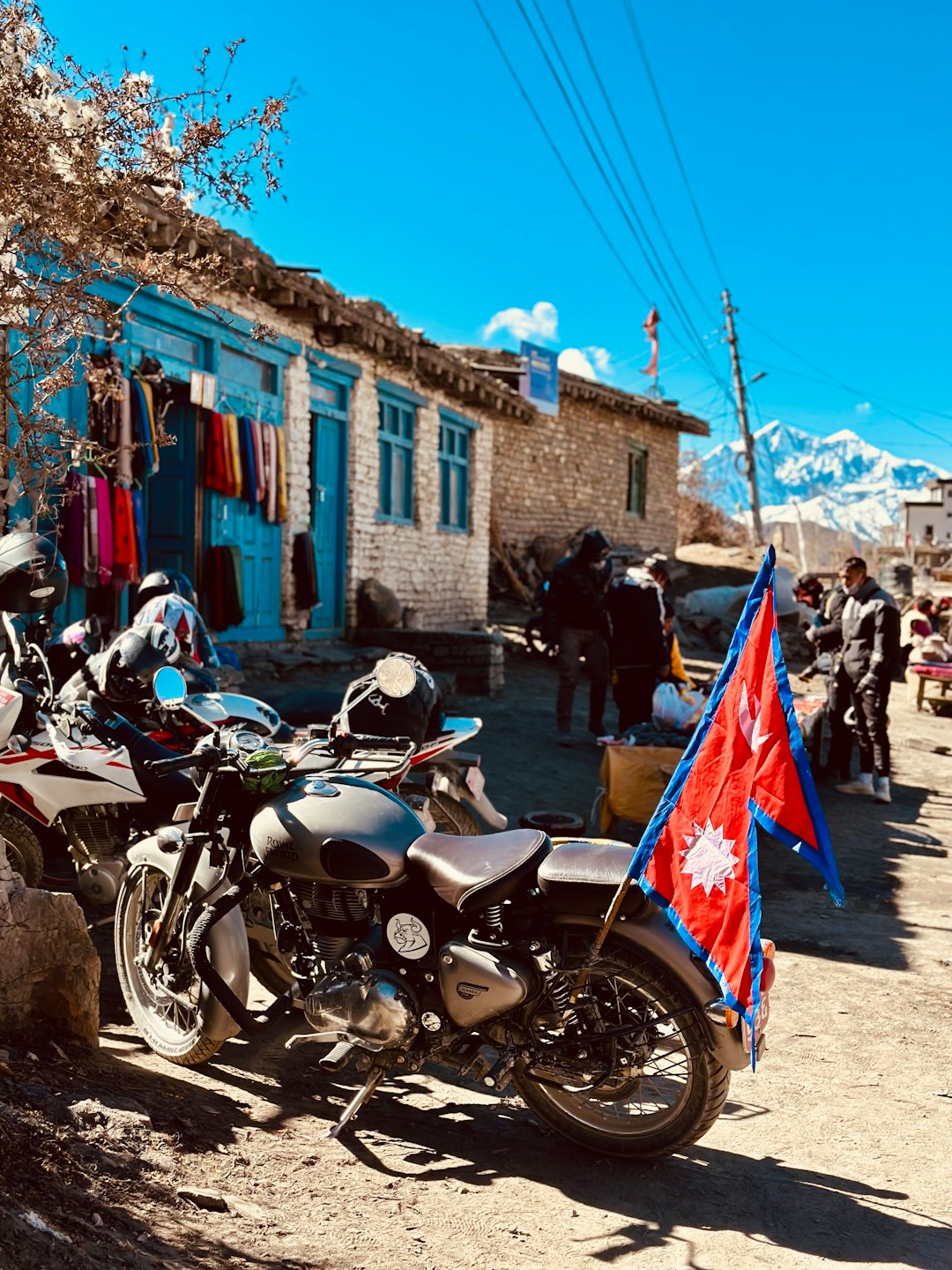
The flag of Nepal is one of the most distinctive national flags in the world because it is not rectangular. Instead, it is made of two stacked triangular pennants. This shape is extremely rare among national flags and immediately sets Nepal apart.
The flag includes a crimson field with a blue border, along with symbols of the moon and sun. These elements have been interpreted as references to permanence, calmness, bravery, and national heritage. Its non-rectangular form makes it one of the clearest examples of a least common flag design.
Rare Colors: Purple and Pink
Some colors are extremely rare in national flags. Purple is one of the best-known examples. Historically, purple dye was expensive and difficult to produce, so it was associated with royalty and luxury rather than mass-produced banners. Even today, purple appears on very few national flags.
Dominica is often mentioned because its flag includes a purple sisserou parrot. Nicaragua also includes a small amount of purple in the rainbow within its coat of arms. These examples show that purple is not completely absent, but it is far less common than red, white, blue, green, or yellow.
Pink is even rarer as a major national flag color. While shades may appear in small details or artistic interpretations, it is not usually used as a dominant official color. This rarity makes flags with purple or pink details stand out in collections of world flags.
Flags with Complex Coats of Arms
Several national flags include detailed coats of arms, making them visually less common than simple tricolors or striped designs. Belize is a strong example. Its flag includes human figures, tools, a mahogany tree, and a detailed shield. It is one of the few national flags to show people prominently.
Complex flags often tell a detailed story about labor, resources, history, and identity. However, they can be harder to reproduce accurately. From a distance, small details may blur, which is why many modern flag design principles recommend simplicity. Still, for countries such as Belize, the detailed imagery is central to the flag’s meaning.
Flags with Maps and Geographic Symbols
The flag of Cyprus is unusual because it displays a map of the country. National flags rarely include a direct map outline, making Cyprus one of the most distinctive cases. The flag also includes olive branches, which represent peace.
Maps on flags can be powerful because they directly identify territory. However, they are uncommon because maps can be politically sensitive, visually complex, and difficult to recognize at small sizes. This makes Cyprus a rare and memorable national flag.
Flags with Weapons
The flag of Mozambique is especially unusual because it includes an AK-style rifle. The rifle appears with a book, a hoe, and a star, symbolizing defense, education, agriculture, and internationalism or solidarity. Few national flags include modern weapons, which makes Mozambique’s flag one of the least common in terms of symbolism.
Weapons on flags are not entirely unknown in heraldry, but modern firearms are rare on national flags. The inclusion is often debated because it is visually striking and politically meaningful. Whether seen as a symbol of defense or struggle, it makes the flag unmistakable.
Image not found in postmetaFlags with Dragons, Birds, and Other Animals
Animals appear on many coats of arms, but relatively few national flags feature a large, distinctive animal as the central design. Bhutan is famous for its dragon, which represents the country’s traditional name, often translated as the Land of the Thunder Dragon. The dragon holds jewels, symbolizing wealth and security.
Dominica features the sisserou parrot, a rare bird native to the island. This makes the flag both colorful and highly specific to the country’s natural heritage. Animal symbols can make flags memorable because they connect national identity with mythology, geography, or biodiversity.
What Makes a Flag “Common” or “Rare”?
A flag may be considered common if it uses widely repeated design elements, such as stripes, tricolors, stars, crosses, or red-white-blue color schemes. A flag may be considered rare if it uses unusual colors, detailed illustrations, uncommon shapes, or symbols that almost no other country uses.
However, common does not mean boring, and rare does not automatically mean better. A simple tricolor can carry deep historical meaning, while a complex flag can be difficult to recognize. The best flags, whether common or unusual, successfully represent the people, history, and values of the nation.
The Balance Between Simplicity and Uniqueness
National flags must balance two important goals: they need to be recognizable and meaningful. Common design elements help with recognition because they are proven and easy to reproduce. Rare design elements help with uniqueness because they give a country a visual identity unlike any other.
This balance explains why many flags look familiar while a few remain visually surprising. The world’s most common flags speak in a shared symbolic language of color and geometry. The least common flags, meanwhile, preserve special stories through unusual shapes, rare colors, maps, animals, weapons, and detailed national emblems.
Conclusion
The most common national flags tend to rely on simple and powerful design traditions: stripes, stars, crosses, crescents, and familiar colors such as red, white, blue, green, yellow, and black. These choices have spread through history, politics, religion, and regional identity. They remain popular because they are easy to see, easy to reproduce, and rich in symbolism.
The least common national flags are memorable for the opposite reason. They break expectations through unusual shapes, rare colors, complex imagery, or unexpected symbols. Nepal’s shape, Dominica’s purple parrot, Mozambique’s rifle, Bhutan’s dragon, Belize’s human figures, and Cyprus’s map all show how national flags can be both official symbols and visual stories. Together, common and rare flags reveal the extraordinary variety of national identity around the world.
FAQ
What is the most common color on national flags?
Red is generally considered one of the most common colors on national flags. It often represents courage, sacrifice, revolution, or national struggle.
What color is rarest on national flags?
Purple is one of the rarest national flag colors. It appears only in small details on a few flags, such as Dominica and Nicaragua.
Which national flag has the most unusual shape?
The flag of Nepal is widely recognized as the most unusually shaped national flag because it is made from two triangular pennants rather than a rectangle.
Why do so many flags use red, white, and blue?
Red, white, and blue became popular through historic national, revolutionary, and maritime traditions. The colors also contrast strongly, making them effective for flag design.
Which national flag includes a weapon?
The flag of Mozambique includes a rifle, along with a book, hoe, and star. This makes it one of the most unusual national flags in the world.
Are common flag designs less meaningful?
No. A common design can still carry deep national meaning. Simple layouts such as tricolors and stripes often represent history, independence, unity, and shared values very effectively.