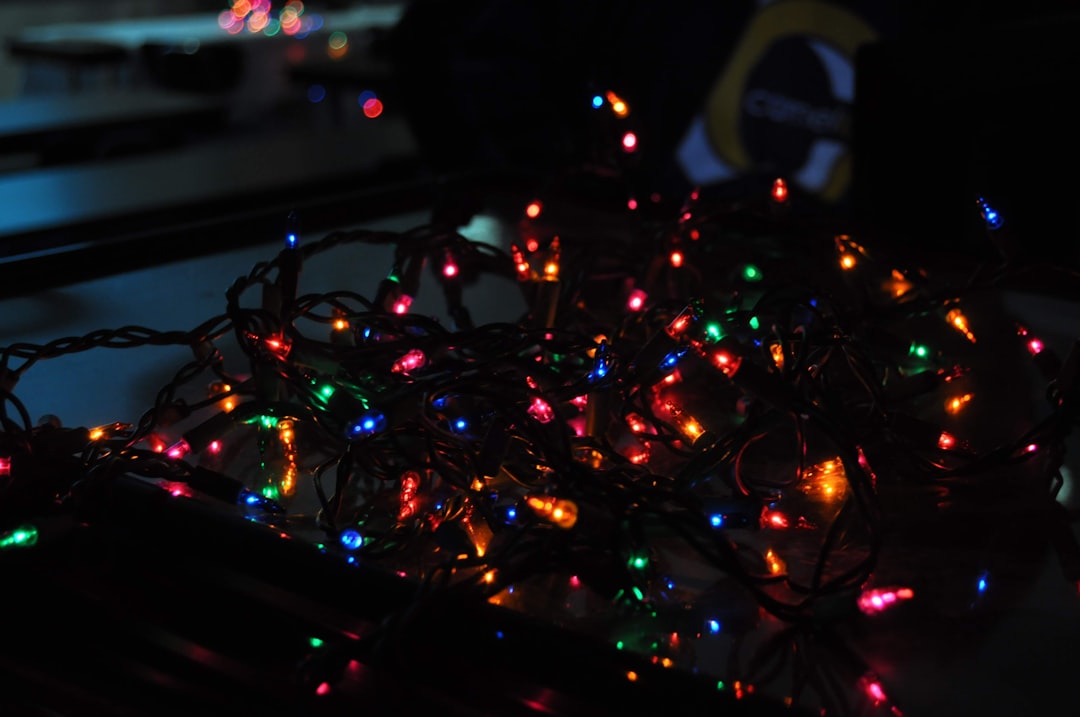
Have you ever plugged in a string of Christmas lights, only to find that none of them work because one tiny bulb is burned out? If so, you’ve experienced firsthand the intricacies—and frustrations—of a series circuit. Understanding how series circuits function not only demystifies your holiday lighting dilemmas but also offers an excellent introduction to the fundamental principles of electronics.
TL;DR (Too Long; Didn’t Read)
Series circuit Christmas lights are wired so that electrical current flows through each bulb in a single path. When one bulb fails, the entire string may go out because the circuit is broken. Though this design can be inefficient, it’s a popular and low-cost solution for decorating during the holidays. Learning how it works gives you insight into basic electrical principles and how circuit configurations affect performance and reliability.
What Is a Series Circuit?
A series circuit is a type of electrical circuit in which the current flows sequentially through each component along a single path. This is different from a parallel circuit, where each component has its own separate path to the power source.
In a string of Christmas lights wired in series, electricity flows from the power source (your electrical outlet), through each light bulb in turn, and finally back to the power source. If one bulb is removed or burns out completely, it breaks the circuit and stops the current from flowing through any of the remaining bulbs.
This type of configuration is commonly used in older or more budget-friendly Christmas lights due to its simplicity and cost-effectiveness.
How Do Series Circuit Christmas Lights Work?
Each bulb in a series circuit acts as a small resistor. The electrical current passes through one bulb, then the next, all the way down the line. When all bulbs are functional, the current flows uninterrupted, and every bulb receives the appropriate voltage split among the total number.
If you have a 120V power source and 10 identical bulbs, each bulb ideally gets about 12V. However, that also means:
- All bulbs must be functional for the circuit to work.
- If one bulb fails, the entire circuit is broken.
- Voltage is divided among the bulbs, meaning more bulbs = less voltage per bulb.
This configuration is perfect for teaching students about voltage division and the effect of resistance on a circuit.
Why Series Circuits Were Used for Christmas Lights
Originally, manufacturers adopted series circuits for Christmas lights for a couple of reasons:
- Cost-effectiveness: Series circuits require less wiring than parallel circuits. Fewer materials mean lower costs.
- Simplicity: Easier to manufacture for mass production and less energy consumption overall.
While these lights were cheaper and simpler to produce, they came with notable downsides—most significantly, the All-Or-Nothing failure problem.
The Weak Link: Voltage Drop and Bulb Failure
Let’s say one of your 50-bulb Christmas light strings burns out. Depending on the type of bulb and whether it has a safety bypass feature, this could break the circuit completely or force all other bulbs to take on higher voltage. That additional voltage increases the strain on the remaining bulbs, potentially causing a domino effect where more bulbs burn out quickly.
Some modern series light sets include a shunt—a small conductor built into each bulb. When the filament inside a bulb burns out, the shunt allows electricity to continue flowing through that spot, keeping the rest of the lights on. However, this isn’t a perfect fix:
- Shunts can fail too.
- With one bulb out, voltage across the remaining bulbs increases, reducing their lifespan.
Comparing Series and Parallel Circuits
To fully appreciate series circuits, it helps to compare them to parallel circuits, another common wiring strategy.
| Category | Series Circuit | Parallel Circuit |
|---|---|---|
| Voltage Distribution | Divided across all bulbs | Full voltage to each bulb |
| Failure Result | All bulbs may go out | Only the failed bulb stops working |
| Complexity | Simple wiring | More complex wiring |
| Manufacturing Cost | Lower | Higher |
Parallel circuits are more reliable and easier to troubleshoot but are more expensive to produce, which is why inexpensive holiday lights often still use series configurations.
Tips for Troubleshooting Series Christmas Lights
If you’ve ever had to check every single bulb in a dark string of lights, you’re not alone. Here are some tips to make the process more efficient:
- Start in the middle: Divide and conquer by checking the halfway point; if that bulb works, the issue is further down.
- Use a light tester: These devices can detect whether power is reaching a bulb or section of the string.
- Check for loose bulbs: Even a slightly dislodged bulb can break the circuit.
- Replace suspect bulbs: If you can’t identify a broken filament, try replacing one at a time.
Good maintenance and careful storage can also help preserve your lights from one holiday season to the next.
Modern Improvements to Series Circuits
Technology has come a long way. Many series circuit light strings now come equipped with features like:
- Fuse protection: Prevents damage from electrical surges.
- Multiple circuits: Some light sets break the string into sections, so only part of the string goes out if a bulb fails.
- LED integration: LEDs are more energy efficient but require different voltage handling methods. Many LED sets use a hybrid of series-parallel wiring.
These improvements make the lights more robust and efficient while still retaining the cost-effective nature of series wiring.
Educational Value of Series Lights
Series Christmas lights are an excellent entry point for those interested in learning basic electronics. They introduce important electrical concepts such as:
- Ohm’s Law: The interplay between voltage, current, and resistance.
- Voltage drop: How power is divided in a series circuit.
- Circuit continuity: The importance of a complete path for current to flow.
Many science educators use series lights to demonstrate these principles in a festive and relatable way.
Conclusion: Is a Series Circuit Right for Your Holiday Lights?
If reliability is your top priority, you might choose to invest in parallel or LED-based holiday lights. But, if you’re budget-conscious or enjoy the DIY fixing aspect, series circuit lights still have their place. Understanding how they work not only makes troubleshooting easier but also opens the door to understanding more advanced electronic systems.
So the next time that entire string of lights refuses to glow—don’t get frustrated. Instead, grab a bulb tester, apply your newfound knowledge, and fix the festive problem like a bona fide electronics enthusiast.